- Towards AGI
- Posts
- The Week AI Changed Finance, HR, and Your Entire Tech Stack
The Week AI Changed Finance, HR, and Your Entire Tech Stack
The uncomfortable truth.

Shen Pandi
April 14, 2026
What You Can’t Ignore:
AI news: Your L&D Budget Can't Save Your Falling-Behind Employees
Hot Tea: OpenAI Bought a Fintech Startup. Your Finance Team Should Notice
OpenAI: Alibaba Ditched E-Commerce for AI
Closed AI: Free AI Models Just Beat the Ones You're Paying For
Your Employees Are Being Left Behind, and Your L&D Budget Is Not Going to Save Them
The Skill Gap No One Talks About at the Board Level
Here is a stat that should stop you mid-scroll. The World Economic Forum's Future of Jobs Report identifies critical thinking, collaboration, and creative problem-solving as the top workforce priorities of this decade. Yet most organizations still cannot prove whether their people actually have them.
You have probably seen this play out. A new training program launches. Completion rates look impressive on the dashboard. Six months later, client escalations rise, cross-functional projects stall, and leadership cannot explain why.
The uncomfortable truth is this. Your teams are absorbing content, not building skills. And there is a significant difference between the two.
Why Your Current Learning Stack Is Measuring the Wrong Thing
Most corporate L&D platforms were built to track completion, not competency. You can see who finished a module. You cannot see whether they can think critically under pressure or pitch a creative solution to a skeptical stakeholder.
That gap is now becoming measurable at scale, and Google Research just proved it.
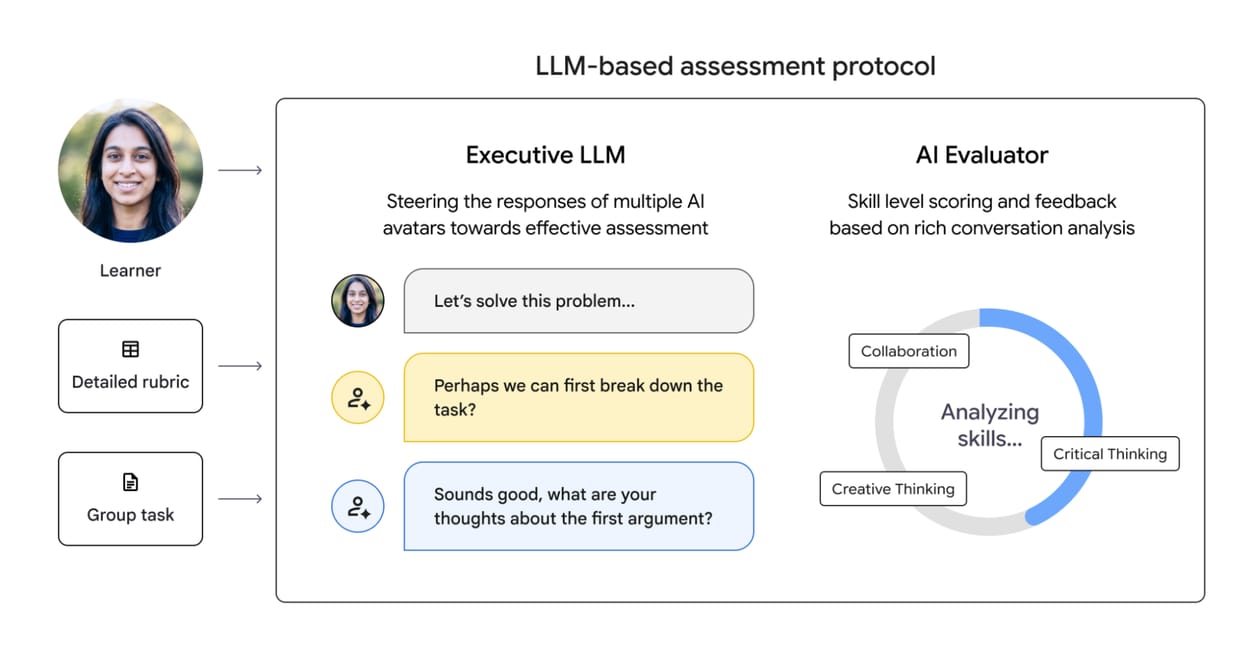
Their research experiment, called Vantage, places learners inside dynamic, AI-powered multi-party conversations. Participants complete real-world scenarios alongside AI avatars, preparing for a debate, navigating pushback, or pitching a vision to a resistant room.
An executive-level AI model monitors the conversation in real time. It introduces friction and complexity to pressure-test how participants respond. Then it scores performance against a validated rubric.
A joint study with New York University confirmed that AI scoring matched human expert judgment. This is not just scalable. It is credible evidence that skill-based assessment can move beyond the classroom.
What This Research Is Telling You to Do Differently
If you lead L&D, HR, or talent development at a B2B organization, you are being asked to prove the ROI of every learning investment. That is nearly impossible when the outcomes that matter most remain invisible.
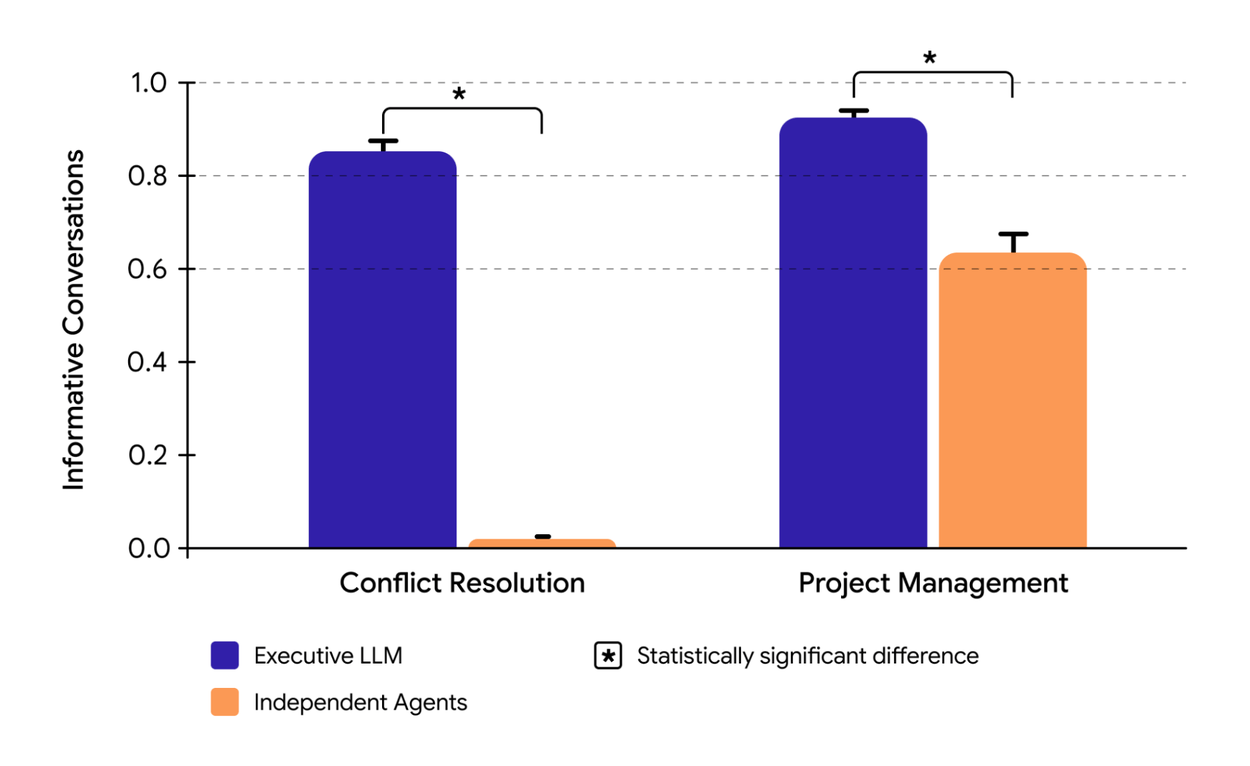
Simulated environments change that equation. They create a controlled space to observe how your people actually behave under realistic conditions. Not how they score on a knowledge check. How they perform when complexity enters the room.
The shift your organization needs to make is clear. Move from tracking participation to measuring capability in context.
Stop Counting Completions. Start Seeing What Your People Can Actually Do.
You do not need to wait for a research lab to build this for you. The framework already exists. The real question is whether your current infrastructure can support it, or whether it is quietly holding your teams back.
The future of workforce development is not a bigger course library. It is a smarter way to see what your people can do when it matters most.
OpenAI Just Bought a Fintech Startup and Your Finance Team Should Be Paying Attention
The Quiet Acquisition That Changes Everything for B2B Finance Teams
Over 70% of finance leaders say they plan to integrate AI into their workflows this year. Yet most of their teams are still running decisions through spreadsheets, gut instinct, and quarterly reviews that are already outdated the moment they land.
That gap just got a whole lot more uncomfortable.
This week, OpenAI confirmed it acquired Hiro Finance, an AI-powered financial planning startup backed by top-tier fintech VCs including Ribbit and General Catalyst.
Hiro let users input salary, debts, and monthly costs, then model different financial scenarios to guide real decisions. Think of it as a CFO-level thinking tool built for anyone who needs it.
OpenAI is absorbing that team entirely. Hiro shuts down on April 20. And the data gets wiped on May 13.
Here Is the Real Problem This Signals for Your Organization
Think about your finance team preparing for a board presentation next month. They are working from last quarter's data, running manual projections, and hoping the assumptions still hold.
Meanwhile, the largest AI company on the planet just paid to acquire engineers who built real-time, scenario-based financial modeling from the ground up.
This is not a coincidence. It is a signal.
OpenAI already positions ChatGPT as a tool for business finance teams. This acquisition is their second move into financial applications. They are building something. And they are building it fast.
The question is not whether AI will reshape how your finance team operates. That answer is settled. The question is whether you are building that capability now or waiting until a platform lock-in decision is made for you.
What "Scenario Modeling at Speed" Actually Means for Decision-Making
Hiro's core value was simple. You put in what you know, and it showed you what could happen under different conditions. That is exactly what your finance and strategy teams need before every major decision.
Vendor contracts, headcount planning, market expansion, pricing adjustments. Each of these carries real financial risk that static reports simply do not capture in time.
AI-powered scenario modeling closes that gap. It replaces the "we'll know next quarter" answer with a live, data-backed range of outcomes your leadership team can actually act on today.
The technology exists. The only variable is whether your organization is using it.
Your Underwriting Team Is Leaving Money on the Table Every Day They Wait. Reinsured.AI helps reinsurers, insurers, and MGAs quote faster, underwrite smarter, and scale without adding headcount. The 40% cost reduction is not a projection. It is what teams using the platform are already seeing.
The Window to Move First Is Still Open. But Not for Long.
When OpenAI moves into a category, it moves fast. You watched it happen in productivity. You watched it happen in customer support. Finance is next.
The organizations that will have the advantage are not the ones who wait for the polished consumer-grade version. They are the ones building internal AI fluency right now, before the market normalizes it.
You still have that window. The only question is whether you use it.
Alibaba Just Abandoned Its Core Business for AI.
The World's Largest Commerce Platform Just Admitted AI Is More Important Than Selling Things
Here is a number that should land hard. Alibaba's AI-related workloads have grown at triple-digit rates for ten consecutive quarters in a row. That is not a trend. That is a structural shift. And it is happening at a company that built its entire empire on retail.
Alibaba just reorganized its whole business around AI. It created a new division called Alibaba Token Hub, pulling its Qwen AI models, consumer apps, and AI products under one unit headed directly by the CEO.
Then it went further. It upgraded its Tongyi AI Lab to a full business unit. It established a Group Technology Committee. It replaced open-source model releases with closed, proprietary ones designed to generate revenue.
This is not a company experimenting with AI. This is a company that looked at its future and decided AI is the only one worth building toward.
The Real Problem Alibaba's Pivot Is Exposing for Insurance and Reinsurance Teams
Consider your underwriting team on a Monday morning. A complex submission lands. It needs pricing, risk modeling, and scenario validation before the client window closes.
The team pulls data from multiple systems. Analysts spend hours cross-checking assumptions. By the time a quote is ready, the margin for error is high, and the speed to market is already behind.
Meanwhile, the entire global technology industry just signaled that AI-driven speed and accuracy are the only competitive advantage that compounds over time.
The AI race in 2026 has entered a new stage, shifting from "whether to do AI" to "whether AI can be perfected." Enterprise demand is moving from testing to full-scale deployment. The organizations that move now will set the operational benchmark everyone else chases.
That window is open. But not for much longer.
What "All-In on AI" Actually Means for Reinsurers and MGAs Right Now
Alibaba is moving its research team, consumer app division, and major AI products into a single unit headed by its CEO because fragmented AI tools produce fragmented results. Consolidation is how you get speed and accuracy at scale.
The same principle applies to your underwriting stack. Disconnected tools, manual handoffs, and siloed data are not just inefficiencies. They are competitive vulnerabilities that grow more expensive every quarter you leave them in place.
The reinsurance and insurance market is pricing risk in real time. If your team cannot model and quote at that pace, you are already losing ground to those who can.
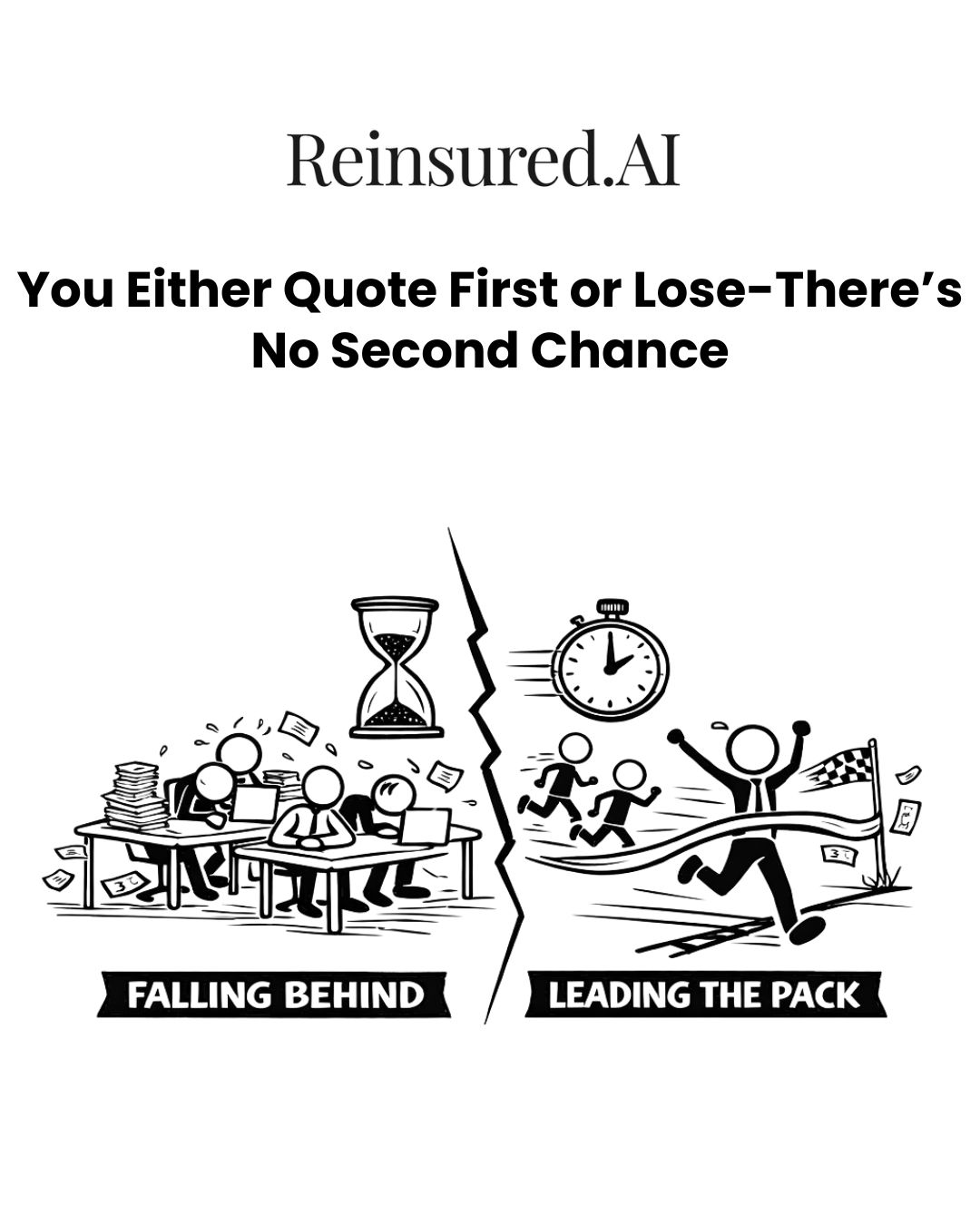
Your Underwriting Speed Is Either a Competitive Advantage or a Liability. There Is No Middle Ground. Reinsured.AI is the leading AI platform built for reinsurers, insurers, and MGAs who compete on speed, accuracy, and operational excellence. The demo takes 15 minutes. The advantage is permanent.
The Signal Is Clear. The Only Question Is Whether You Act on It.
Alibaba did not pivot because AI is interesting. It pivoted because the companies that operationalize AI first will define the economics of every industry they touch.
Reinsurance and insurance are next. The question for your organization is not whether AI will reshape underwriting. That answer is already settled.
The question is whether you are building that capability now, or waiting until your competitors have already used it to take the business you should have won.
You Are Still Paying for Closed AI Models That Free Ones Just Outperformed
The Moment Proprietary AI Lost Its Only Real Advantage
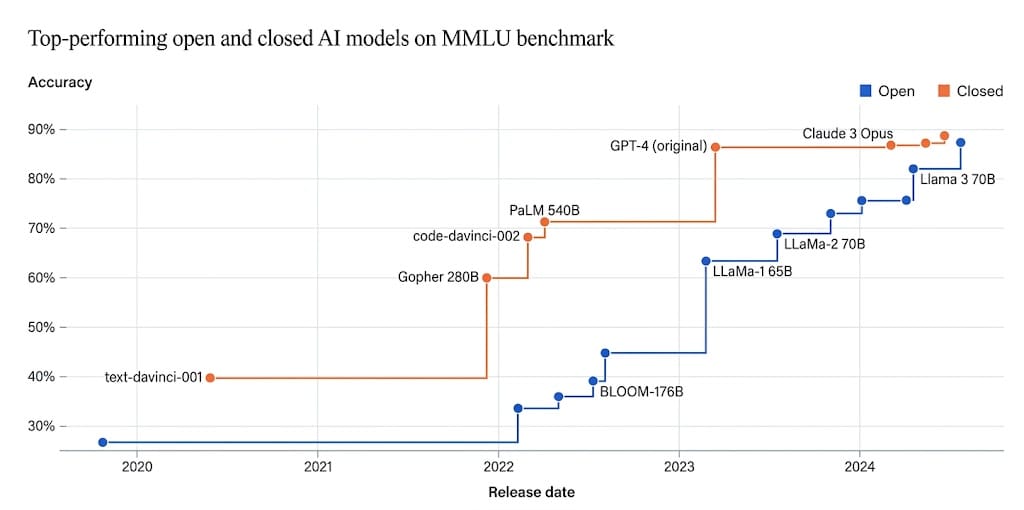
Here is a number that should make your procurement team uncomfortable. Microsoft just released an open-source embedding model that simultaneously outperforms paid alternatives from OpenAI, Google, Amazon, and NVIDIA. Under an MIT licence. Free. No usage restrictions. No vendor contract required.
That is not an incremental update. That is a structural shift in how enterprise AI infrastructure gets built and priced.
Your Closed API Bill Just Became Harder to Justify
Imagine this. Your team is mid-build on a retrieval-augmented generation system, a legal discovery pipeline, or an enterprise search product. The architecture depends on a proprietary embedding API from a major vendor.
The pricing changes without notice. The terms of service shift. The rate limits tighten as your usage scales. You are locked into a relationship that gets more expensive the more successful your product becomes.
This is the exact problem Microsoft's Harrier release just solved for every enterprise engineering team paying attention.
What Microsoft Actually Released and Why It Changes Your Options
Harrier is a family of embedding models released by Microsoft's Bing team under the MIT license. It is the first open-source embedding stack to top the multilingual MTEB v2 benchmark, which is the primary industry standard for measuring retrieval and embedding quality.
It supports over 100 languages and ships in three sizes. The flagship model runs 27 billion parameters with 5,376-dimensional embeddings. The mid-range sits at 0.6 billion. The edge model runs at 270 million for lighter deployments.
All three share the same API, the same embedding format, and a 32,768-token context window. That consistency matters because it means you can prototype with the smallest model and scale to the largest without rewriting your integration.
The Problem Open Embeddings Actually Solve for Your Organization
The real cost of proprietary AI infrastructure is not the per-token pricing. It is the compounding risk of building your enterprise stack on access you do not control.
Every time a vendor changes its pricing model, deprecates an API version, or adjusts usage terms, your team absorbs the disruption. That risk does not appear on a cost-per-call spreadsheet, but it shows up in engineering hours, delayed releases, and architectural rework.
Harrier eliminates that category of risk. You run it. You own the deployment. The model is yours to modify, redistribute, and integrate your stack requirements.
What This Means for Your AI Roadmap Right Now
The commoditisation of foundation AI infrastructure is no longer a future event to plan for. It is happening in your current vendor contracts, your current architecture decisions, and your current budget cycles.
If your organization is still treating open-source AI as a secondary option behind closed APIs, the benchmark data no longer supports that position. Open embeddings are not just cheaper. According to the multilingual MTEB v2 results, they are better.
The question your team needs to answer this quarter is not whether to evaluate open alternatives. It is why you have not already.
Journey Towards AGI
Research and advisory firm guiding on the journey to Artificial General Intelligence
Know Your Inference Maximising GenAI impact on performance and Efficiency. | Model Context Protocol Connect with us, and get end-to-end guidance on AI implementation. |
Your opinion matters!
Hope you loved reading our piece of newsletter as much as we had fun writing it.
Share your experience and feedback with us below ‘cause we take your critique very critically.
How's your experience? |
Thank you for reading
-Shen & Towards AGI team