- Towards AGI
- Posts
- The AI Decisions Quietly Reshaping Your Enterprise Right Now
The AI Decisions Quietly Reshaping Your Enterprise Right Now
STOP DEPLOYING BLIND

Shen Pandi
March 17, 2026
Today, we’re diving into:
Gen AI: The Job Description Mistake Losing You Top Talent
Open AI: Why Meta's Open Model Just Became Your Risk
Hot Tea: The Infrastructure Grab Happening Without You
Closed AI: The Free Model That Just Beat Your Paid One
Your AI Hiring Tools Are Already Finding Better Talent Than Your Old Process Ever Could
The most powerful upgrade to your talent pipeline is not happening in the boardroom. It is happening in your job descriptions.
The Hiring Revolution Your Leadership Team Needs to Accelerate Right Now
Every conversation about AI and the workforce has focused on which jobs will disappear. But according to research from London Business School, the real opportunity is already unfolding somewhere far more valuable, inside your hiring process, before a single candidate clicks apply.
Generative AI is not just about screening applications faster. It is giving your organization the ability to redefine what great talent looks like in the first place.
You Are Not Just Filling Roles Anymore, You Are Building Smarter Ones
Here is what forward-thinking HR leaders are already capitalizing on. When your team uses AI tools to draft job descriptions, those systems analyze thousands of existing postings and labor market datasets to surface competencies your team may never have thought to include.
That is a genuine competitive edge. Organizations using AI to define roles are moving from instinct-based hiring to data-backed talent architecture. You are not just describing a job. You are engineering the role for the market that actually exists today, not the one from three years ago.
The organizations doing this well are building talent pipelines that their competitors cannot replicate.
The Reach Advantage That Puts the Best Candidates in Your Pipeline First
The outreach stage is where AI delivers its most immediate wins. AI now lets you personalize recruitment messaging across platforms and audiences at a scale no human team could match.
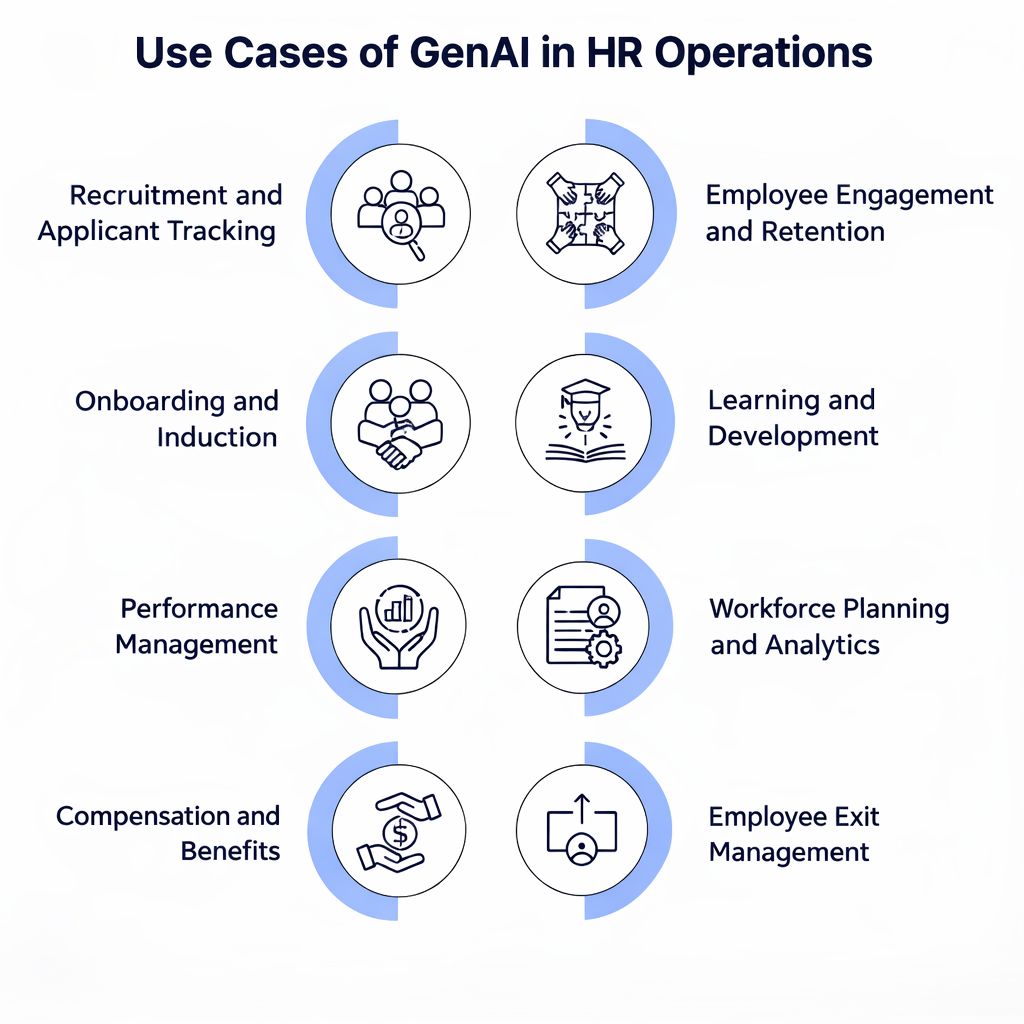
Reach people who would never have found your role through a standard job board. Tailor your message to resonate with different candidate profiles simultaneously. Research in organizational behavior confirms that the right recruitment messaging significantly increases the number of applicants. When AI personalizes those messages at scale, the quality and diversity of your applicant pool expand in ways that directly impact your business outcomes.
You are not just posting jobs anymore. You are running precision talent acquisition.
The Efficiency Gain That Frees Your Best Recruiters for What Actually Matters
AI-powered selection tools are compressing timelines that used to take weeks into hours. Automated screening, interview analysis, and customized assessments mean your recruiters spend less time on administration and more time on human judgment, evaluating potential, culture fit, and the nuanced signals that data alone cannot capture.
As London Business School's Isabel Fernandez-Mateo notes, AI is exceptionally useful for processing large amounts of information and automating routine tasks, freeing human decision-makers to focus on what they do best.
Your Hiring Data Has a Blind Spot. Find Out What Your AI Tools Are Missing
The Organizations That Move Now Will Own the Talent Market for the Next Decade
The promise of generative AI in hiring is real and compounding fast. The organizations that build the right data infrastructure behind their AI hiring tools today will access, attract, and convert talent their competitors never even see.
The question is not whether to use AI in hiring. It is whether your data foundation is strong enough to let it perform at its full potential.
Is Your Enterprise AI Roadmap Built on Quicksand? Meta's Crisis Proves It
The open-source AI model you're betting your business on just blinked, and your competitors didn't wait.
The $600 Billion Wake-Up Call You Can't Ignore
If your enterprise AI strategy depends on a single vendor's open-source model, Meta just handed you your biggest warning of 2026. Meta Platforms is delaying Avocado, its next flagship AI model, by roughly two months after internal testing revealed it underperformed against rival systems in reasoning, coding, and writing.
That's not a product setback. That's a signal your vendor pipeline is more fragile than your board thinks.
Your "Free" Open-Source Model Now Has a Hidden Price Tag
Here's what should alarm your procurement team: Meta's disappointing internal results have prompted its leaders to consider temporarily licensing Google's Gemini technology to power some of its own products.
Read that again. The company championing open-source AI is quietly shopping for a proprietary fallback. If Meta can't sustain its own open-source commitments under competitive pressure, what does that mean for your roadmap that's built around those freely available models?
The Boardroom Battle That Could Derail Your Integration Timeline
You need to know what's happening inside Meta before you deep-integrate its models into your enterprise stack.
Internal tensions have surfaced over AI strategy, with reported disagreements between chief AI officer Alexandr Wang, chief product officer Chris Cox, and chief technology officer Andrew Bosworth over how AI models should strengthen Meta's advertising business.
A company divided at the executive level ships inconsistently, and your SLAs don't care about their org chart drama.
The Open vs. Proprietary Debate Is Now Your Procurement Problem
This isn't just Meta's internal soap opera. The situation highlights a broader industry divide between open and proprietary AI development strategies. Rival firms such as OpenAI and Anthropic favour more controlled model releases, citing safety concerns.
For your enterprise, this divide translates into a concrete risk matrix. Open-source gives you flexibility and cost control. Proprietary gives you reliability and a contractual SLA. Right now, the market is forcing you to pick a lane, or build a hybrid strategy that accounts for both.
What You Should Do Before Your Next AI Vendor Review
The meta-lesson from Meta is straightforward: no single AI vendor or model line should be a single point of failure in your enterprise infrastructure. Meta has committed roughly $600 billion to data centre infrastructure and projects up to $135 billion in AI spending this year, yet even they needed a contingency plan.
Your contingency plan must be in place before your primary vendor delays by two months, not after.
The enterprises that will win in 2026 aren't betting everything on open-source idealism. They're building AI stacks with redundancy, optionality, and a very clear-eyed view of who they're trusting with their competitive advantage.
Your Open-Source Strategy Is Dangerously Outdated, And Big Tech Knows It
The rules of open source just changed. Are you still playing the old game while your competitors rewrite the infrastructure your business runs on?
The Uncomfortable Truth Your Engineering Team Hasn't Told You
Open source didn't fade. It quietly became the most powerful competitive battleground in enterprise technology, and the companies that understand this are already locking you out.
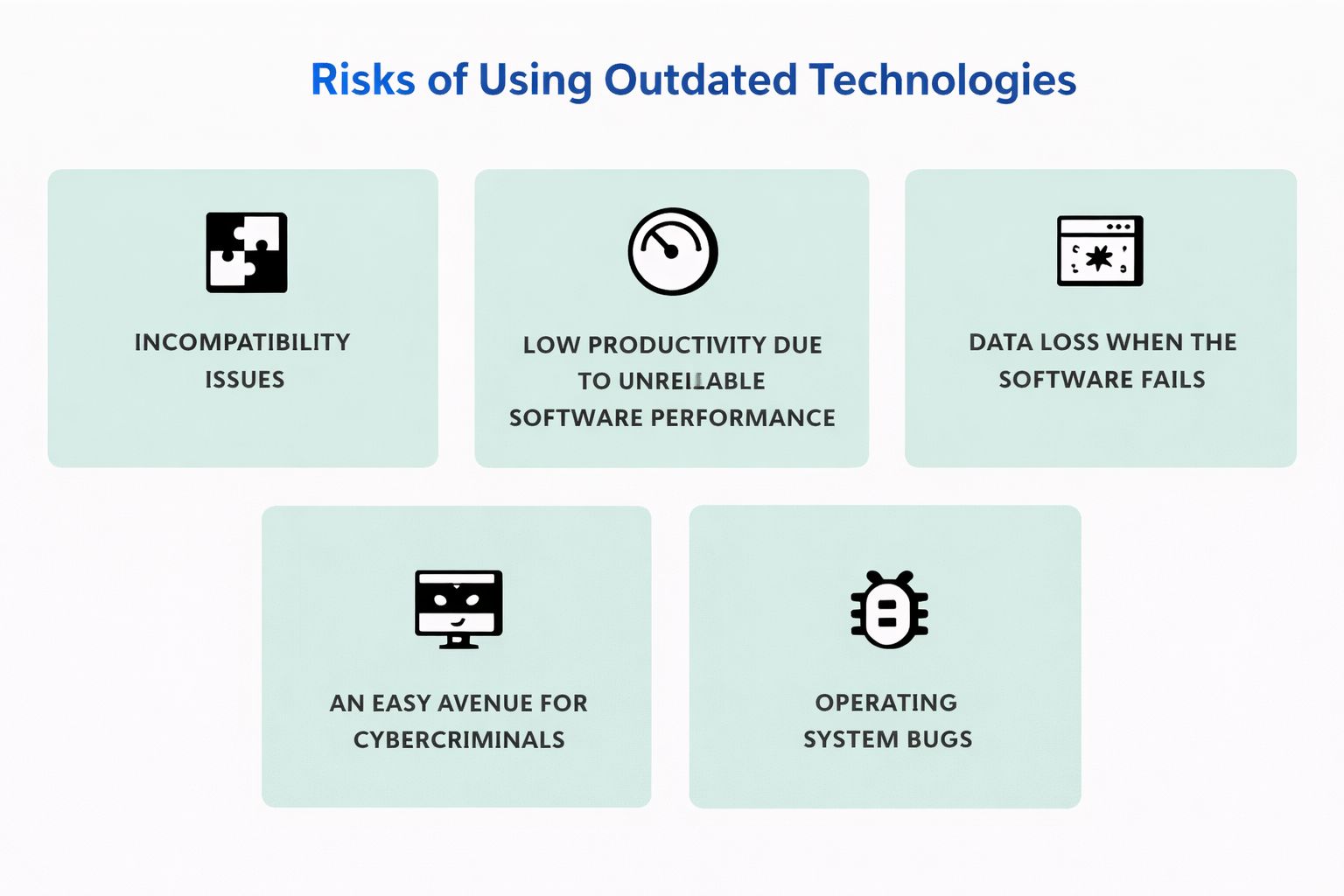
Open source has become less about openness for its own sake and more about control, not proprietary control exactly, but control over the layers where ecosystems harden into standards. If your procurement team still thinks of open source as "free software," you're already three moves behind.
Your Infrastructure Is Being Decided Without You in the Room
Here's what the headline numbers actually mean for your business:
CNCF now hosts more than 230 projects with over 300,000 contributors worldwide, and its 2025 survey found that 98% of organizations have adopted cloud-native techniques, with 82% of container users running Kubernetes in production.
That's not a developer trend. That's your enterprise operating environment being standardized in real time, by other companies' engineers, on their priorities, for their commercial advantage.
The Dirty Secret Behind "Community Contributions" That Could Cost You Millions
Stop thinking about open-source contributions as charity. The companies investing the most aren't being altruistic; they're setting the defaults your operations will depend on for the next decade.
In 2025, Red Hat led all CNCF contribution activity with 194,699 contributions, followed by Microsoft with 107,645, and Google with 91,158. These are not philanthropists. The companies investing upstream aren't doing it because they've discovered civic virtue; they're doing it because whoever shapes the substrate usually gets leverage over everything built on top of it.
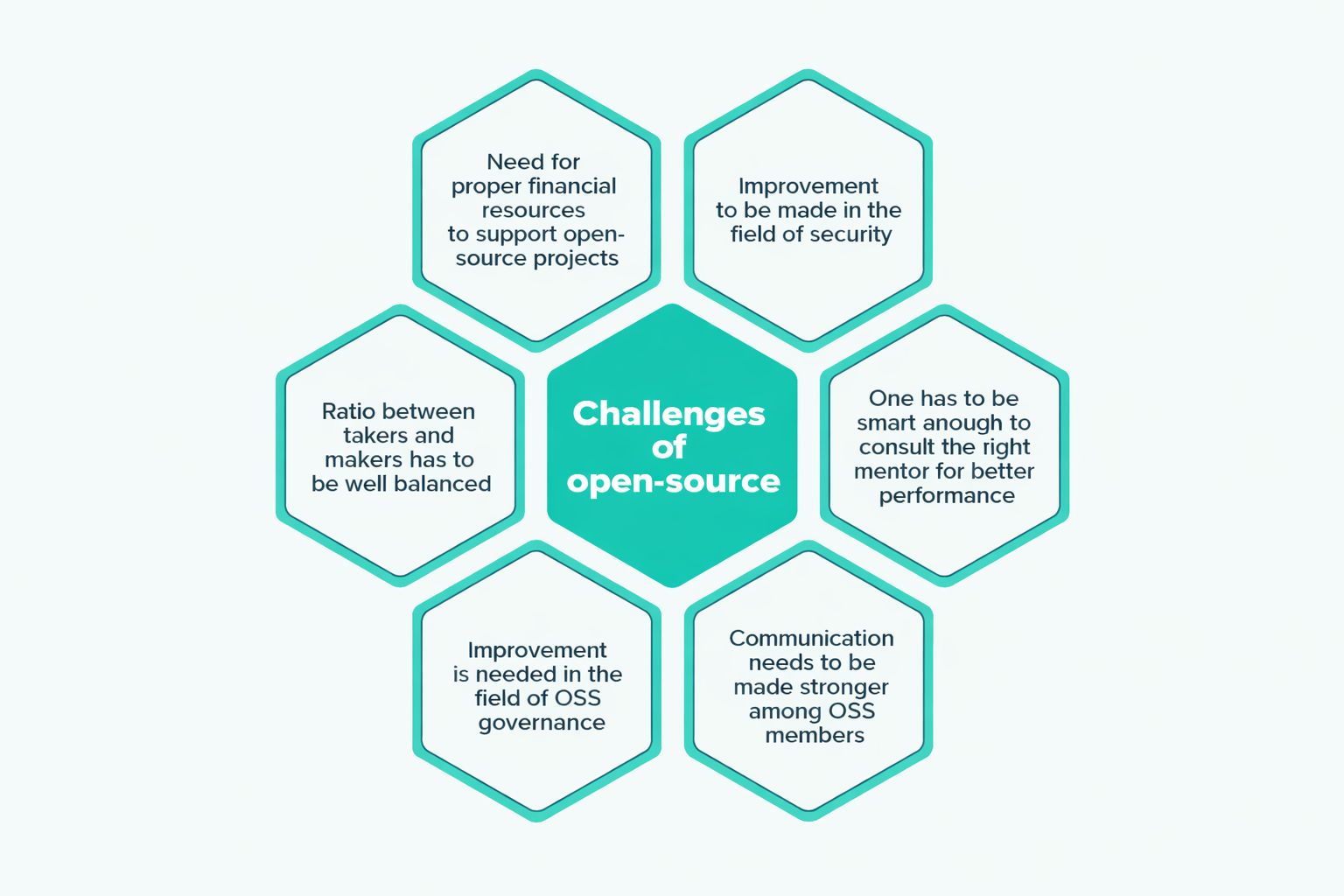
When you standardize on Kubernetes, you're building on an infrastructure that Red Hat and Microsoft helped design to serve their business models. Does it align with yours?
Why Your AI Workloads Are Already Hostage to This Power Struggle
This isn't just a developer conversation; it has direct P&L implications for your AI investments.
66% of organizations hosting generative AI models now use Kubernetes for some or all inference workloads, with Kubernetes explicitly named the de facto operating system for AI.
Meanwhile, Nvidia ranked 14th in Kubernetes contributions over the past two years and has open-sourced KAI Scheduler, a Kubernetes-native GPU scheduler, investing in the scheduling, orchestration, and workflow layers that determine how effectively those chips get used in real-world AI systems.
NVIDIA isn't just selling you hardware. It's shaping the environment in which your AI workloads live or die.
What You Must Do Before Your Next Technology Review
The enterprises winning right now aren't waiting for vendors to explain this shift; they're mapping which open-source projects govern their critical infrastructure and asking one decisive question: Who controls the roadmap, and what do they get when I depend on it?
Open source is where the cloud-native stack gets standardized, observability gets normalized, platform engineering gets productized, and where AI infrastructure is increasingly being built.
Your competitors are in those contributor tables. Are you?
The Closed AI Model You're Paying a Fortune For Just Got Beaten By a Free One
The most powerful reasoning model in the world is now open source. Your licensing budget is about to become your biggest competitive advantage.
The Moment Everything Changed for Your Enterprise AI Budget
The debate between open-source and closed AI models is officially over. If your enterprise is ready to move beyond expensive proprietary systems, you're positioned to unlock a performance advantage that most of your competitors haven't discovered yet.
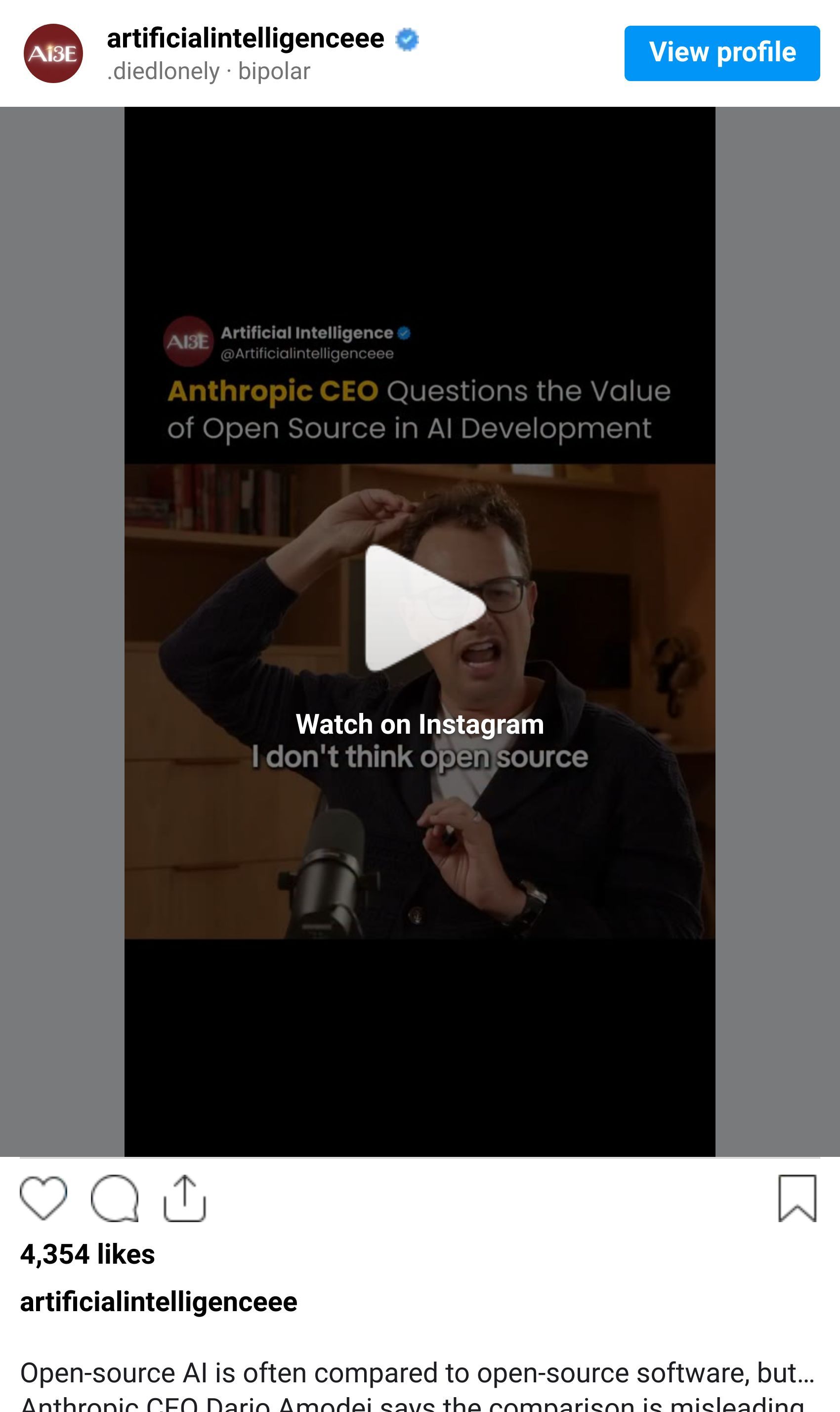
Kimi K2 Thinking, an open-source agent from Chinese AI research lab Moonshot AI, uses a mixture-of-experts architecture and outperforms OpenAI's ChatGPT and xAI's Grok on key benchmarks, including Humanity's Last Exam and BrowseComp.
This isn't a fringe research paper. This is a structural opportunity your procurement team should be moving on right now.
You Can Now Run Top-Tier Reasoning In-House at a Fraction of the Cost
Your CFO is going to want to see this. IBM Principal Research Scientist Kaoutar El Maghraoui put it plainly: open-weight model dominance means enterprises can finally bring top-tier reasoning in-house, with dramatically lower costs.
Think about what that means for your AI deployment roadmap. The capability ceiling you thought only a premium closed model could reach is now accessible without a six-figure API contract.
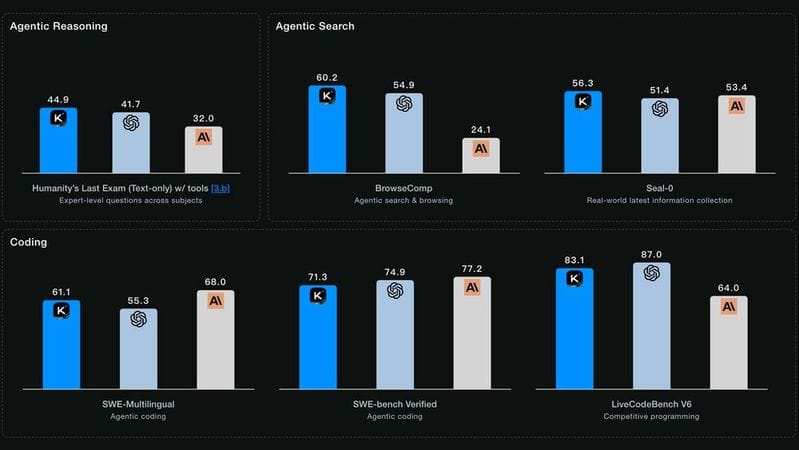
Kimi K2 Thinking can execute up to 200 to 300 sequential tool calls without human intervention, gathering new information, updating its reasoning, and exploring different tools in a process called "interleaved thinking." That is enterprise-grade multi-step automation, ready to deploy today.
Why Your Vendor Is Now Selling Personality Instead of Performance
Here is the signal your AI strategy team cannot afford to miss. Closed model providers recognise they have lost the raw performance argument. OpenAI's newest model, GPT-5.1, was designed to be warmer and more conversational, with the company stating that great AI should be enjoyable to talk to.
According to El Maghraoui, this shift signals a broader move toward a world where raw intelligence is becoming a commodity. It is a battle between model IQ versus model EQ.
When your vendor starts leading with personality, performance parity has arrived. That is your signal to take back control of your AI budget.
The One Step That Separates Enterprises That Win From Those That Wait
Open-source power is only half the equation. IBM Fellow Aaron Baughman noted that open-source status alone does not guarantee trust and transparency and that third-party independent assessments of model performance remain essential.
El Maghraoui identified the real competitive frontier: the next race will not be about model quality alone, but about who builds the most trusted, compliant, and secure deployment pipelines.
Open source gives you the engine. The right data management infrastructure determines whether it delivers ROI from day one.
Show Me the ROI Gap Between My Current AI Stack and What's Possible
The enterprises that act now will own the cost and capability advantage for the next five years. The only question is whether you will lead that shift or spend next year catching up to the companies that did.
Journey Towards AGI
Research and advisory firm guiding on the journey to Artificial General Intelligence
Know Your Inference Maximising GenAI impact on performance and Efficiency. | Model Context Protocol Connect with us, and get end-to-end guidance on AI implementation. |
Your opinion matters!
Hope you loved reading our piece of newsletter as much as we had fun writing it.
Share your experience and feedback with us below ‘cause we take your critique very critically.
How's your experience? |
Thank you for reading
-Shen & Towards AGI team