- Towards AGI
- Posts
- How Economics and Consumers Will Force Providers' Hands
How Economics and Consumers Will Force Providers' Hands
Why 2026 Will Be the Year Providers Can't Wait.

Shen Pandi
December 16, 2025
Here is what’s new in the AI world.
AI news: The Great AI Acceleration
Hot Tea: BI Reimagined: Powered by Next-Gen AI in the Cloud
Open AI: Is Meta's 'Avocado' Ripe for Secrecy?
OpenAI: Oracle Stock Slide Prompts Firm Denial of OpenAI Delay Rumors
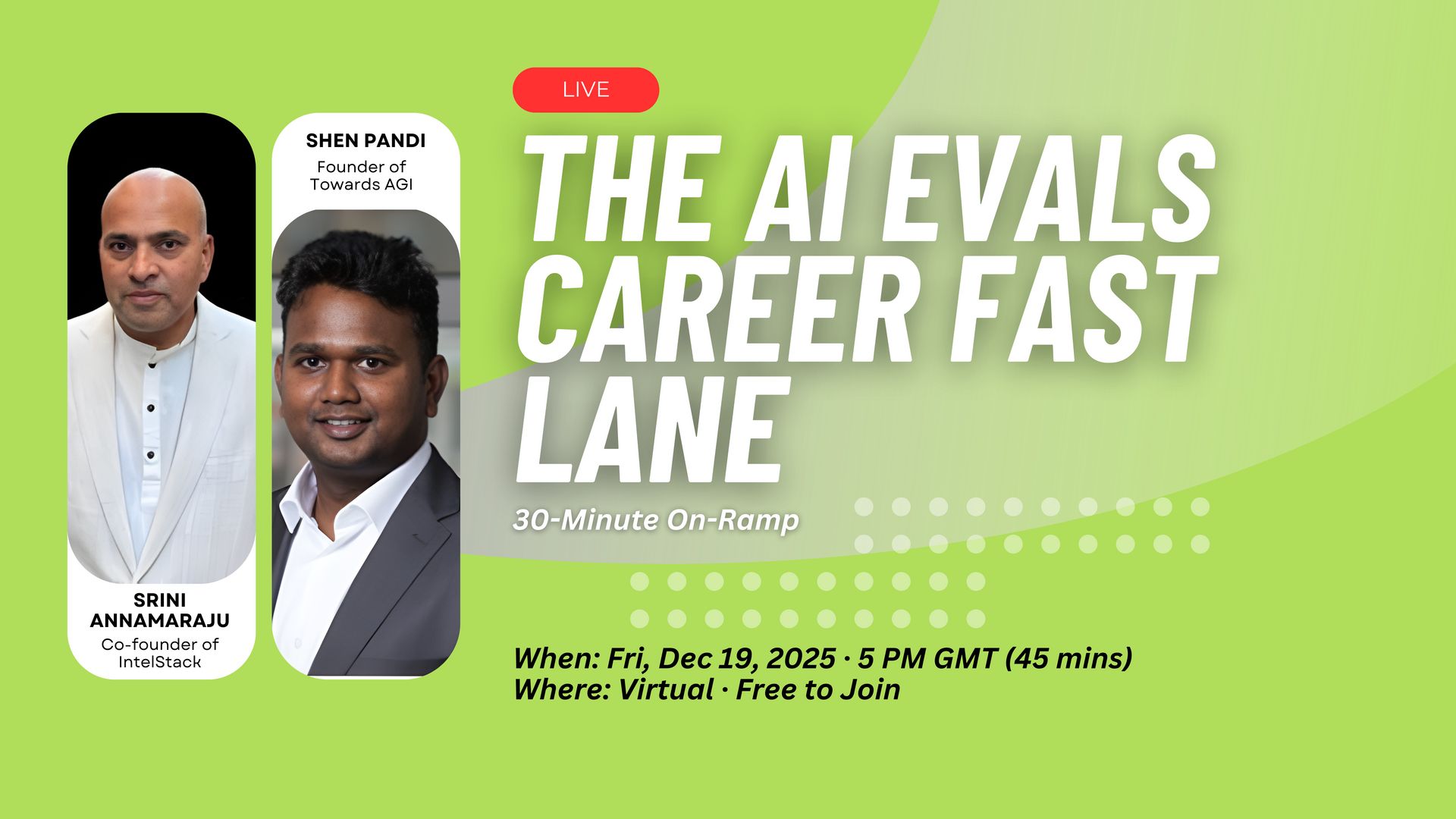
Build a Future-Proof Career in AI Safety
Secure Your Spot Today!
Join the first 45-minute online session to explore how you can transition into the fast-growing field of AI assessment, without needing extensive coding or machine learning knowledge.
You'll learn:
The Emerging Need: How the swift advancement of AI is driving demand for specialists who can verify its dependability.
Your Transition Path: Ways to apply your background in product, QA, data, engineering, or risk management to roles in AI trust and safety.
Your Next Steps: An actionable 90-day plan to develop key experience, engage with AI initiatives, and demonstrate your impact.
Hosted by: Srini Annamaraju & Shen Pandi
Date: Friday, December 19, 2025
Time: 5:00 PM GMT
The Twin Forces Driving 2026 AI Adoption
AI adoption in healthcare is accelerating, moving from low-risk administrative uses to higher-stakes clinical workflows. The industry is building its "AI muscle" through proven applications, driven by consumer demand and economic necessity.
The Path to Mainstream: Starting with Low-Stakes Wins
Health systems are beginning with "high-frequency, low-stakes" AI applications, such as AI scribes for documentation and tools for billing and credentialing. These offer a clear return on investment and build confidence for broader adoption.
As Shiv Rao, CEO of Abridge and a practicing cardiologist, notes, these initial successes are breaking the dam. "I think we're going to see a lot of innovation... very, very quickly. What has allowed the dam to break is that those lower-stakes workflows are working."
Consumer Readiness and Economic Pressure
Adoption is being propelled from two sides:
Patients: 35% of Americans have used AI to research health concerns, with nearly half of those under 34 seeking AI health advice. As Vineeta Agarwala of Andreessen Horowitz states, "The consumer is ready."
Providers: Facing unprecedented financial strain—with hundreds of hospitals at risk of closing—health systems have a powerful economic incentive to adopt cost-saving AI tools. The traditional "laggard" phase is shrinking rapidly.
This creates a critical opportunity for providers to "meet patients in the middle" by integrating reliable AI tools into care delivery.
The Next Frontier: Tackling High-Stakes Workflows
As confidence grows, AI is expanding into more complex areas:
Clinical Decision Support: Physicians like Rao use AI as a thought partner during patient rounds, refining initial outputs through interactive dialogue to reach better clinical conclusions.
Intelligent Triage: AI can address pervasive "bad triage" problems—directing patients to the right provider, at the right site, at the right time—through always-available, AI-powered gateways.
Point-of-Care Knowledge: Tools like OpenEvidence give clinicians instant access to vast medical literature, with over 40% of providers already using such platforms.
The Non-Negotiable: Accuracy and Deterministic Outcomes
Even for "low-stakes" back-office tasks, the quality bar is extremely high. A single error in provider credentialing can block patient access to critical care.
As Derek Lo of Medallion explains, this often requires deterministic automation (100% accurate every time) rather than non-deterministic large language models (LLMs). AI is used to speed up the delivery of these fail-safe systems.
Companies like Abridge set a similarly high standard for clinical AI, using proprietary models and continuous feedback loops from millions of encounters to minimize hallucinations.
Their technology catches 97% of hallucinated content, significantly outperforming general models like GPT-4o (82%). "In healthcare, 82 versus 97 is meaningful," Rao emphasizes.
A Balanced View on Risk
While eliminating AI risk is paramount, excessive caution also carries a cost. Agarwala cautions against comparing AI only to a "perfect" standard, rather than to the current reality of workforce shortages and missed care.
"Sometimes the real world is nothing," she notes, pointing to examples like missed colonoscopies due to forgotten prep instructions. An AI reminder, while not perfect, is far better than no contact at all.
The shift is inevitable. Patients will soon routinely arrive at appointments armed with AI-generated health information. Clinicians must rapidly integrate these tools into their workflows to remain effective guides.
As Rao warns, if providers don't leverage AI quickly, "it could get very uncomfortable."
The trajectory is clear: AI in healthcare has passed the 20% adoption tipping point and is accelerating toward becoming essential infrastructure. The focus now is on building trustworthy, accurate systems that amplify both patient agency and clinical expertise, while addressing the industry's most pressing economic and access challenges.

Stuck with Static Dashboards? Transform BI with Next-Gen AI Cloud Solutions
In today’s fast-paced digital world, your business runs on data. But raw data alone isn't enough; you need the power to process, analyze, and interpret it in real time to drive decisions.
This is where AI-driven cloud technology becomes your strategic advantage, turning static information into actionable intelligence.
Forward-thinking organizations are already embracing this fusion to unlock innovation and smarter, faster decision-making.
Your Shift: From Static Storage to Smart, Proactive Ecosystems
You’ve seen how conventional cloud systems revolutionized data storage and access. Now, the next evolution is here: the intelligent, AI-integrated cloud.
By weaving AI directly into your cloud infrastructure, you can automate decisions, predict trends, and optimize performance across every department.
Whether it's sales, supply chain, finance, or customer service, your teams can leverage this intelligence to analyze vast datasets in real time.
This transforms your approach from reactive problem-solving to proactive opportunity-seeking, dramatically boosting productivity and fostering a culture of continuous innovation.
How This Powerful Combo is Revolutionizing Your Business Intelligence
AI and cloud are a perfect match. The cloud provides the scalable compute and storage you need for big data, while AI delivers the instant insights.
Together, they are reshaping your business intelligence in four key ways:
Real-Time Analytics: AI algorithms process massive data streams in real time, uncovering trends and opportunities that human analysis would miss.
Workflow Automation: Intelligent systems automate manual data tasks, increasing accuracy and freeing your team from repetitive work.
Predictive Intelligence: Models forecast customer demand, predict equipment maintenance needs, and identify potential risks before they become issues.
Enhanced Security: AI supercharges your cybersecurity by detecting anomalous patterns and neutralizing threats before they escalate.
The result is a more agile, insight-driven organization capable of making quicker, more confident decisions.

Your Opportunity in India's Digital Revolution
Businesses across India are rapidly adopting AI-powered cloud environments to stay competitive. You can use these intelligent ecosystems to personalize customer experiences, streamline operations, and scale efficiently.
Industries like banking, retail, healthcare, and manufacturing are already deploying these technologies to enhance efficiency and build resilience.
By leveraging the cloud's flexibility and AI's analytical power, you are closing the gap between strategy and execution like never before.
Your Partner for a Smooth and Secure Transition
Navigating this transformation requires a reliable technology partner. Leaders in high-tech infrastructure provide the smart cloud solutions you need to modernize your operations with a focus on innovation, performance, and security.
The right partner ensures your journey to an AI-driven future is smooth, secure, and strategically aligned with your goals.
The future of business intelligence is intelligent, dynamic, and cloud-native. As data volumes explode and competition intensifies, the organizations that thrive will be those that successfully integrate AI into their cloud ecosystems.
This integration is your path to superior efficiency, sustained innovation, and insight-powered growth.
The transformation starts now. By turning your data into a strategic asset today, you are not just adapting to the future; you are actively shaping what tomorrow's intelligent enterprise will look like.

Is 'Avocado' Meta's First Closed AI? New Model Reportedly in the Works.
After months of public hints, Meta's strategic shift away from open-source AI is becoming clearer. The company is reportedly developing a new AI model, internally code-named "Avocado," which may mark a significant departure from its previous open-source approach championed by CEO Mark Zuckerberg.
Multiple reports indicate that Avocado, slated for release around 2026, could be a proprietary, closed model. The project is housed within a specialized group inside Meta's AI Superintelligence Labs, led by Chief AI Officer Alexandr Wang, who is known to favor closed-model development.
This move raises questions about the future of Meta's Llama series, the company's flagship open-source models. Earlier this year, Zuckerberg stated Meta would continue leading in open source but wouldn't "open source everything."
The development of the much-anticipated Llama 4 "Behemoth" model has reportedly been delayed for months, with some executives even discussing abandoning it entirely, and available versions have received lukewarm feedback from developers.
The pivot coincides with broader internal restructuring as Zuckerberg invests billions in a superintelligence-focused team. The company laid off several hundred employees from its Fundamental AI Research (FAIR) unit.

Furthermore, Chief AI Scientist Yann LeCun, a longtime open-source advocate and skeptic of large language models, recently announced his departure from Meta.
This potential turn toward a closed model represents a notable reversal for Zuckerberg. Just last year, he famously dismissed closed platforms and authored a memo titled "Open Source AI is the Path Forward."
However, the intensely competitive CEO is reportedly driven by concerns about falling behind rivals like OpenAI and Google.
Meta has committed to spending approximately $600 billion in the coming years to fund its AI ambitions, signaling the high stakes of this strategic realignment.
Nervous Investors? Oracle Moves to Quell Fears Over OpenAI Timeline.
Oracle has refuted a recent report claiming that its data center construction for OpenAI will be delayed from 2027 to 2028. According to a Bloomberg report citing unnamed sources, the slowdown was attributed to shortages in labor and materials.
Following the report, Oracle's stock closed down more than 4% on Friday.
In a statement to CNBC, an Oracle spokesperson strongly contested the claim:
Site selection and delivery timelines were established in close coordination with OpenAI following execution of the agreement and were jointly agreed. There have been no delays to any sites required to meet our contractual commitments, and all milestones remain on track.
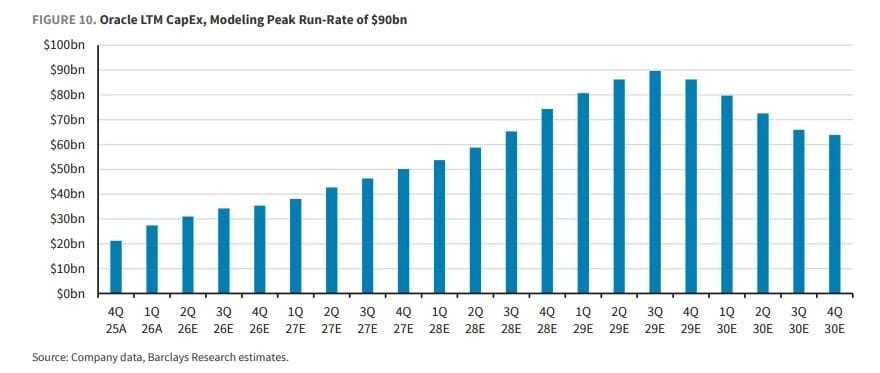
The spokesperson did not, however, provide a specific timeline for when the cloud computing infrastructure for OpenAI would become operational.
The partnership between Oracle and OpenAI is significant, with OpenAI stating in September that the deal is valued at over $300 billion over the next five years.
Oracle, traditionally known for its database software and business applications, has been expanding its cloud infrastructure business, which now accounts for over a quarter of its revenue. However, it remains a smaller player compared to hyperscale giants like Amazon, Microsoft, and Google.

OpenAI is actively securing capacity from multiple providers. In a separate September announcement, Nvidia stated it had signed a letter of intent to supply OpenAI with at least 10 gigawatts of equipment, with the first phase expected in the second half of 2026.
However, as of a November filing, Nvidia noted that "there is no assurance that we will enter into definitive agreements."
Further expanding its infrastructure strategy, OpenAI is also pursuing custom chip development in collaboration with Broadcom. Broadcom CEO Hock Tan indicated on a recent earnings call that this project is a long-term initiative, with significant volume expected in “2027, 2028, 2029” rather than 2026.
OpenAI declined to comment on the reports.

Journey Towards AGI
Research and advisory firm guiding industry and their partners to meaningful, high-ROI change on the journey to Artificial General Intelligence.
Know Your Inference Maximising GenAI impact on performance and Efficiency. | Model Context Protocol Connect AI assistants to all enterprise data sources through a single interface. |
Your opinion matters!
Hope you loved reading our piece of newsletter as much as we had fun writing it.
Share your experience and feedback with us below ‘cause we take your critique very critically.
How's your experience? |
Thank you for reading
-Shen & Towards AGI team