- Towards AGI
- Posts
- GenAI Risks Fuel Global Cyberattack Surge in November
GenAI Risks Fuel Global Cyberattack Surge in November
Is This the New Normal?

Shen Pandi
December 12, 2025
Here is what’s new in the AI world.
GenAI news: Global Cyberattacks Surge with GenAI in the Mix
AI News: The Overlooked Influence of Open Source
Hot Tea: Is OpenAI Building an AI Gadget?
OpenAI: OpenAI's Win After Its Own Warning on Google
Accelerate Your Career in AI Trust & Evaluation
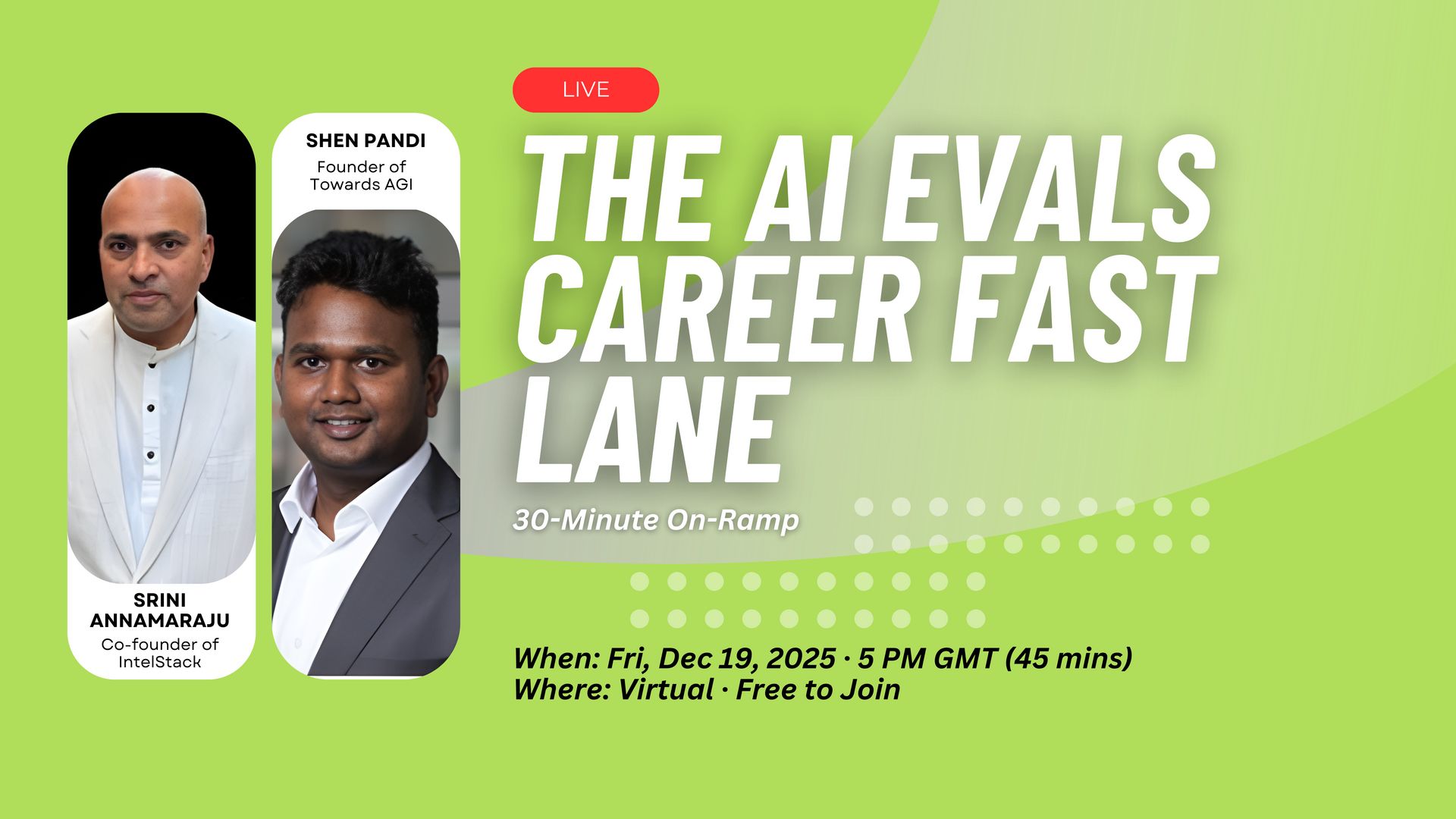
A free 45-minute virtual session to learn how professionals can pivot into the high-demand field of AI evaluation, no advanced coding or machine learning expertise required.
You’ll discover:
The Opportunity: Why the rapid growth of AI is creating a major need for evaluators to ensure its reliability.
Your Path In: How to translate skills from product, QA, data, engineering, or risk management into AI-trust roles.
Your Action Plan: A practical 90-day blueprint to build relevant experience, contribute to AI projects, and prove your value.
Hosts: Srini Annamaraju & Shen Pandi
When: Friday, Dec 19, 2025, 5 PM GMT
How Ransomware Evolved with Generative AI
Cyber attacks continued to rise globally in November 2025, with organizations facing an average of 2,003 attacks per week, a 3% increase from October and a 4% year-over-year rise.
According to Check Point Research, this escalation is driven by heightened ransomware activity, expanding attack surfaces, and growing risks from the internal use of generative AI tools.
The United States accounted for 52% of global attack victims, followed distantly by the United Kingdom (4%) and Canada (3%).
Most Targeted Sectors:
Education remained the most targeted industry, with 4,656 weekly attacks per organization (a 7% annual increase).
Government entities faced 2,716 attacks per week (+2% YoY).
Associations and Non-Profits saw a striking 57% annual surge, with 2,550 weekly attacks.
Industries with the Highest Victim Count:
Industrial Manufacturing (12% of all victims)
Business Services (11%)
Consumer Goods & Services (10%)
Regional Attack Trends:
Latin America recorded the highest volume: 3,048 weekly attacks per organization (+17% YoY).
APAC followed with 2,978 attacks (stable YoY).
Africa saw 2,696 attacks (-13% YoY).
Europe experienced a slight dip (-1% YoY).
North America saw a 9% annual increase, remaining a major target for sophisticated, financially motivated threat groups.
Research indicates a global convergence in attack volumes, with the gap between the most and least targeted regions narrowing significantly over the past year.
A New Source of Data Leakage
The widespread adoption of generative AI tools has introduced significant data-exposure risks. In November 2025, 1 in every 35 GenAI prompts posed a high risk of sensitive data leakage, affecting 87% of organizations that regularly use AI.
An additional 22% of prompts contained potentially sensitive information, including internal communications, proprietary code, or personal identifiers. On average, organizations use 11 different GenAI tools per month, many of which operate outside formal security governance.
This unsupervised usage increases the risk of accidental data exposure, making organizations more vulnerable to ransomware and AI-powered cyberattacks.
Ransomware Activity Surges
Ransomware attacks intensified in November 2025, with 727 reported incidents, a 22% increase compared to November 2024. North America was the epicenter, accounting for 55% of all disclosed ransomware attacks, followed by Europe (18%).
The data underscores a threat landscape where escalating attack volumes are compounded by new vulnerabilities introduced through the rapid and often ungoverned adoption of generative AI within enterprises.
Policymakers Ignore Open Source AI's Role in Shifting Global Power
For years, you've been told the AI race is a contest between US and Chinese tech giants, measured in proprietary "frontier models" and computing power.
But if you look at the actual evidence, the real-world adoption of AI in products and services, a different, more dynamic story emerges. The true battleground for influence is not behind closed doors; it's unfolding in the open-source ecosystem.
Your New Reality: Open Source is the Real Arena
Empirical data reveal that the performance gap between open and closed models is narrowing dramatically, while open models remain far cheaper to deploy.
This open layer isn't a side show; it's the substrate on which millions of developers and startups build. It shapes the languages, tools, and assumptions that diffuse AI across the globe.

By analyzing model download data, you can observe this shift in real time, moving beyond speculation to see where power is truly flowing.
The Global Rebalancing: Your View from the Data
The landscape you once knew is rapidly transforming:
1) The Erosion of US Dominance: In the early 2020s, American companies like those behind BERT and CLIP overwhelmingly led open-source downloads. That dominance has steadily eroded.
2) The Meteoric Rise of China: Since early 2025, China's presence has exploded. Companies like DeepSeek and Alibaba have seen their models become global defaults "almost overnight."
Their rise reflects a shift towards practical, deployable models, large-scale reasoning architectures, multimodal systems, and aggressively optimized networks. They release variants at a staggering pace, directly supporting a wide user base.
3) Europe's Quiet, Critical Role: While Europe's download footprint is smaller, its contribution is more pluralistic.
Universities, nonprofits, and research groups provide the public-interest infrastructure, the tools, adapters, and scientific work that sustains the entire open ecosystem. In a multipolar world, this foundational role is an underappreciated strength.
4) The New Power Brokers: Independent Developers and Communities: Perhaps the most significant shift is the rise of unaffiliated developers, hobbyists, and online collectives. These groups, not large corporations, are increasingly shaping the ecosystem.
They specialize in repackaging, quantizing, and adapting models for practical use. A single repackaged release from a small collective can influence global adoption as much as a major corporate launch.
This is a new center of gravity in the AI economy that barely registers in policy discussions.
The Collapsing Transparency Within "Open" Models
As you navigate this ecosystem, you must be aware of a critical tension: transparency is collapsing. While "open-weight" models proliferate, true openness is declining.
In 2022, most downloaded models disclosed meaningful details about their training data. By 2025, that fraction had fallen below 40%.
For the first time, downloads of opaque models outnumbered downloads of models meeting basic open-source criteria.
Licenses are becoming more restrictive, model access is increasingly gated, and the rhetoric of openness often masks a reality of controlled access.
This trend coincides with rising geopolitical stakes, yet policy debates mistakenly treat "open source" as a stable, uniform category rather than a space undergoing rapid commercialization and fracturing.
Your Required Conceptual Shift
As a leader or policymaker, you must recognize that the open-source ecosystem is where influence is being negotiated, not in isolated training runs. It determines:
Which models are actually used and deployed?
Which languages and cultural assumptions are encoded into global tools?
Which countries' companies set the technical defaults?
Which developers can meaningfully participate in the AI economy?
The rapid ascent of Chinese open models proves that leadership here is not fixed and can be reshaped within a single model generation. Open source AI is not separate from geopolitical competition; it is one of its primary arenas.
If you focus only on frontier labs and compute budgets, you will miss the more dynamic, diffuse, and globally distributed layer where real adoption and power shifts occur. To understand and to shape the future distribution of power in AI, you must look to the open-source ecosystem.
This is where you will see emerging trends and concentrations of power long before they become conventional wisdom. Ignoring this layer means misunderstanding your own dependencies and your own potential leverage in the world to come.

Is the AI Future in Your Hands? OpenAI Explores Device-Centric Strategy.
AI is transforming every aspect of life, and now it’s turning its focus to one of the most personal human experiences: dating.
This shift is so significant that Justin McLeod, the founder and CEO of the popular dating app Hinge, is stepping down to launch a new AI-focused venture called Overtone.
McLeod, with a decade of experience in the dating industry, holds a complex view of AI's role. While he recognizes its appeal as a solution to widespread loneliness, he also issues a stark warning.
Real relationships involve risk, vulnerability, effort, and reciprocity. We should be very worried when people start choosing artificial intimacy over the real thing.
His concern is that AI, following the path of social media, will supercharge our desire for overstimulation and emotional shortcuts.
Inside OpenAI's Ambitious AI Device
Beyond dating, AI is poised to become a constant physical presence in our lives. A major development in this area is the secretive hardware project from OpenAI CEO Sam Altman and legendary Apple designer Jony Ive.
With a prototype already in internal testing, the industry is watching to see if it can replicate the "ChatGPT moment" with a consumer device.
The core vision is radical: a device that provides AI with a full, continuous context of your life. Unlike a phone, this hardware would be "always present, always sensing," acting as a truly proactive assistant that listens, understands, and handles follow-up tasks.
Crucially, the device would feature clear, visible signals to indicate when it is actively paying attention.
To make this vision work, OpenAI is shifting its strategy:
Local, Compact Models: Instead of relying solely on massive cloud-based models, OpenAI is developing its compact "Mini" models. These would run meaningful AI directly on the device, addressing major privacy concerns by not streaming a user's entire life to the cloud.
A Custom Chip: Current server chips are not optimized for this task. OpenAI is exploring building its own custom processor designed for a single user, optimized for tight power constraints and real-time, on-device AI inference.
The rollout is expected in phases, with simpler, cloud-assisted devices coming first. More advanced, privacy-focused "always-on" devices will follow as the powerful on-device computing technology matures over the next few years.
OpenAI is entering a crowded field, competing with projects like Google's AI glasses with Warby Parker and Meta's "AI memory" wearables.
A Reality Check on Business Adoption
Despite the hype and massive investment in AI, actual business adoption is progressing slowly.
A recent U.S. Census Bureau survey provides a reality check: 57% of businesses have no plans to use AI in the next six months, and another 22% are unsure. Only 21% expect to adopt AI tools in the near term.
This cautious pace was echoed by global investors at Abu Dhabi Finance Week, who warned that AI valuations are running far ahead of fundamentals.
The sentiment is that while a "gold rush" is underway, it may still be years before AI delivers a substantial, widespread impact on corporate earnings.
In summary, AI's journey is moving from digital interfaces into the intimate realms of human relationships and ambient, always-present hardware. However, its integration into the core operations of the broader economy remains a gradual, early-stage process.
Was This the Plan? OpenAI's Big Win Right After Its Google 'Code Red'
OpenAI has released new data highlighting a dramatic surge in enterprise adoption of its AI tools over the past year, as it seeks to reinforce its leadership position amid intense competition from Google and others.
Key findings from the report show deep integration and significant productivity gains:
Explosive Usage Growth: ChatGPT enterprise message volume has grown eightfold since November 2024.
Deep Workflow Integration: Use of Custom GPTs, tailored assistants for specific workflows, jumped 19x this year, now accounting for 20% of all enterprise messages.
Complex Task Automation: Organizations are using the API for far more advanced work, consuming 320 times more "reasoning tokens" than a year ago, indicating a shift from simple queries to complex problem-solving.
Measurable Time Savings: Employees report saving 40 to 60 minutes per day using OpenAI's enterprise tools, and 75% say AI enables them to perform tasks, including technical ones, they couldn't do before.
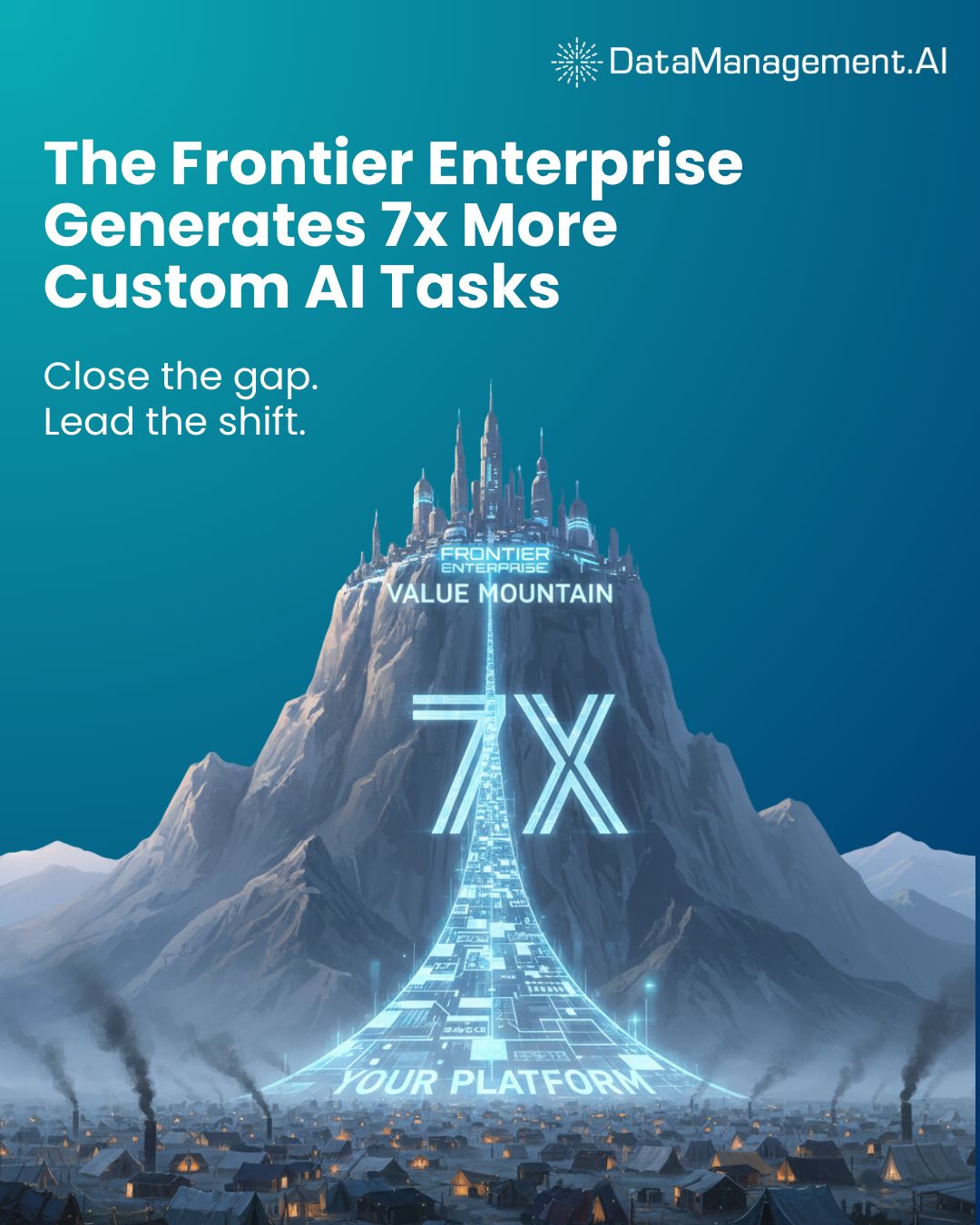
Despite this growth, OpenAI's leadership acknowledges a "growing divide" in adoption. While "frontier" companies and workers integrate AI deeply as an "operating system," others treat it as a simple software purchase.
Many users also aren't yet leveraging the most advanced features like data analysis or search, suggesting adoption is still in early stages.
The report comes as OpenAI faces significant competitive and financial pressures:
While it leads in enterprise market share (with ~36% of U.S. businesses as ChatGPT Enterprise customers vs. 14% for Anthropic), a majority of its revenue still comes from consumer subscriptions, a segment threatened by Google's Gemini.
The company is also competing against Anthropic (which is primarily B2B-focused) and a growing field of open-source model providers.
OpenAI has committed a staggering $1.4 trillion to infrastructure over the next few years, making robust enterprise growth critical to its long-term business model and ability to justify this massive investment.
Internally, the company is addressing risks that come with democratized access to technical skills, such as potential security vulnerabilities from "vibe coding" by non-experts.
It points to tools like its new Aardvark security researcher agent (in private beta) as part of the solution to automatically detect bugs and exploits.
Ultimately, OpenAI frames its data as evidence that AI is transitioning from a novelty to a core platform for business operations, with the most significant economic impact occurring when firms fully adopt and scale the technology.
Journey Towards AGI
Research and advisory firm guiding industry and their partners to meaningful, high-ROI change on the journey to Artificial General Intelligence.
Know Your Inference Maximising GenAI impact on performance and Efficiency. | Model Context Protocol Connect AI assistants to all enterprise data sources through a single interface. |
Your opinion matters!
Hope you loved reading our piece of newsletter as much as we had fun writing it.
Share your experience and feedback with us below ‘cause we take your critique very critically.
How's your experience? |
Thank you for reading
-Shen & Towards AGI team