- Towards AGI
- Posts
- Anthropic Verticalizes Agentic AI: Claude Plugins Wipe $285B from Stocks
Anthropic Verticalizes Agentic AI: Claude Plugins Wipe $285B from Stocks
From Code to Command

Shen Pandi
February 06, 2026
Here is what’s new in the AI world.
AI news: Anthropic’s Claude Shifts Power from Software Platforms to Agentic Workflows
Hot Tea: Fitbit Founders Launch ‘Luffu,’ Guardian for Family Health
Open AI: Qwen3-Coder-Next Delivers Ultra-Sparse Agentic Coding at Scale
OpenAI: Claude Plans First AI-Planned Drive On Mars
Anthropic Moves From Model to Market Disruption - Trigger $285B “SaaSpocalypse”
Anthropic’s latest release has sent shockwaves through software, legal tech, and financial services stocks, erasing roughly $285 billion in a single trading session.
The culprit isn’t a breakthrough AI model or a radical new algorithm: it’s 11 open-source plugins for Claude Cowork, the company’s agentic AI assistant, designed to automate complex, multi-step workflows for non-technical users.
Claude Cowork, launched earlier this month, extends the capabilities of Claude Code (Anthropic’s developer-oriented coding assistant) into the broader enterprise domain.
It can read and interpret files, organize folder structures, draft documents, and execute multi-step processes across tools, all with user consent.
The plugins announced on January 30 effectively verticalize this capability, allowing enterprises to tailor Claude to domain-specific workflows in productivity, marketing, sales, finance, data analysis, customer support, product management, biology research, and most importantly, legal operations.
The legal plugin alone, which automates NDA triage, contract review, compliance checks, and legal briefings, catalyzed panic among investors.
Stock declines were widespread and massive: Thomson Reuters (-15%), RELX (-14%), LegalZoom (-20%), and ripple effects across Nasdaq-listed software companies.
The Technical Mechanics Behind the Panic
At its core, Claude Cowork remains the same Claude model under the hood.
The market shock did not arise from a novel legal reasoning engine or a specialized fine-tuned case law model. Instead, Anthropic packaged structured prompts, workflow instructions, and tool integration frameworks into plug-and-play modules.
Each plugin encodes:
Task orchestration: Multi-step instructions for Claude to execute sequences autonomously.
Tool integration rules: Predefined connectors to internal and external data sources, APIs, and SaaS platforms.
Data and role conditioning: Contextual instructions to constrain outputs according to user consent and domain-specific standards.
The legal plugin, for example, instructs Claude to parse contracts, identify clauses relevant to NDAs or compliance frameworks, and generate executive summaries while flagging any output for human review.
This is agentic AI in practice: the system maintains context, sequences actions autonomously, and interacts with multiple tools, without needing additional coding or model fine-tuning.
Now, the most important part:
Analysts argue that the market realized Anthropic’s strategic pivot: from providing a model-as-platform to providing workflow-as-platform.
Historically, companies like Thomson Reuters built legal AI on top of external models, such as OpenAI’s.
Now, Anthropic can pre-package workflows that directly compete with those products, essentially reducing the barrier for enterprise adoption while simultaneously threatening incumbents’ business models.
Enterprise Implications: Workflow Ownership Over Model Ownership
The shock is a reminder for software leaders that AI adoption is no longer just about models, it’s about operational integration.
Claude Cowork illustrates how an agentic AI, guided by curated prompts and workflow templates, can execute domain-specific tasks in real time, effectively bypassing months of enterprise software development cycles.
For executives, the implications are stark:
Software incumbency is vulnerable. Traditional SaaS offerings can be disrupted not by a superior algorithm, but by ready-to-deploy AI workflows.
Rapid iteration is crucial. Claude Cowork was launched on January 12, with plugins arriving less than three weeks later, compared to enterprise software release cycles that often span quarters.
Verticalization drives adoption as predefined, domain-specific workflows lower friction for enterprise users, making AI adoption faster and more autonomous.
Agentic AI redefines roles as systems like Claude are no longer passive assistants; they are active operators capable of multi-step reasoning across tools, essentially creating new categories of competition.

Nvidia and Dassault Systèmes Bring Virtual Twins to Industrial AI at Scale
If your organization designs complex systems, from aerospace engines to advanced medical devices the combination of Nvidia’s accelerated AI infrastructure with Dassault Systèmes’ 3DExperience platform could redefine how you build, simulate, and validate products.
The new industrial AI platform merges virtual twin technology with agentic AI “virtual companions” to create fully testable, science-validated models of real-world systems before a single prototype exists.
This means the ability to simulate thermal dynamics, stress loads, fluid flows, and performance under operational conditions, all within a unified digital environment.
Instead of iterating through expensive physical prototypes, you can explore design variants, predict maintenance cycles, and optimize workflows virtually.
These virtual twins are not just static 3D models, they’re multi-scale, multi-physics, and multidisciplinary representations that evolve as your data does.
The platform introduces agentic AI companions like Aura, Leo, and Marie that act as embedded experts.
They understand intent, reason across your industrial world models, and orchestrate actions autonomously, effectively serving as “agents-as-a-service” within your engineering workflow.
For example, Leo can analyze a proposed structural modification in a jet engine, simulate performance impacts, flag potential safety risks, and even propose optimized alternative, all before you touch metal.
This is exactly what AgentsX enables at a foundational level. By leveraging a multi-agent architecture, AgentsX allows you to orchestrate specialized AI agents, each designed for a particular domain or task working in concert to solve complex workflows.
Using Mixture-of-Experts routing, AgentsX dynamically directs tasks to the right agent, ensuring that an agent like Leo isn’t spending cycles on supply chain logic while one like Aura isn’t stuck trying to calculate structural stresses.
Workflow orchestration ties it all together, coordinating actions, resolving dependencies, and maintaining context across the process.
Now, back to Aura, Leo, and Marie.
They’re powered by Nvidia’s AI models, GPUs, and software libraries, these companions operate at scale. They leverage multi-agent orchestration, high-throughput simulation, and real-time analytics to deliver predictive insights across product lifecycles.
For industrial teams, this shifts the paradigm: your AI no longer just augments design, it actively drives decision-making, catching issues early, accelerating iteration, and reducing risk.
The collaboration also illustrates Nvidia’s broader push into physical AI.
By integrating Dassault’s model-based systems engineering with Nvidia’s Omniverse Blueprint, the company is effectively designing “AI factories” capable of orchestrating production at planetary scale.
Qwen3-Coder-Next: Ultra-Sparse Agentic Coding at Scale
If you’ve been following the “vibe coding” frenzy, Alibaba’s Qwen3-Coder-Next is engineered to change the game.
This isn’t just another coding LLM, it’s an 80B-parameter model that only activates 3B per forward pass, leveraging an ultra-sparse Mixture-of-Experts (MoE) architecture.
For you as a developer or enterprise AI lead, that means you get the reasoning power of a massive system while maintaining low-latency execution and high throughput for repository-scale tasks.
It’s like reading an entire Python codebase or a complex JavaScript framework in a fraction of the time typical for dense models, all while retaining cross-file context and dependency understanding.
The model’s long-context capabilities are particularly notable.
Traditional Transformers choke on sequences over 16k–32k tokens, but Qwen3-Coder-Next handles 262,144 tokens using a hybrid of Gated DeltaNet and Gated Attention.
DeltaNet introduces linear-complexity attention, allowing the model to maintain global state without the quadratic memory wall that stalls conventional Transformers.
Pair this with the sparse MoE, and you get throughput gains of up to 10x compared to dense architectures of similar parameter size.
Qwen3-Coder-Next is agentically trained, not just passively exposed to code.
Through the MegaFlow orchestration system, every task whether bug fixes, repository-level refactoring, or multi-file dependency resolution is executed in a containerized environment.
The model receives real-time feedback from unit tests and runtime evaluation, adjusting its strategy mid-rollout via reinforcement learning.
This teaches the AI to anticipate errors, recover from failures, and refine its outputs continuously, a capability you would recognize as self-correcting agentic behavior, critical for enterprise-grade software automation.
The system is further specialized via expert models for domains like Web Development and User Experience (UX).
Web Development experts interact with live Chromium environments via Playwright to validate UI composition, while UX experts optimize tool-call fidelity across multiple CLI and IDE scaffolds.
Once trained, these experts are distilled into the single MoE model, so you get the precision of specialized agents without sacrificing deployment simplicity.
From a security standpoint, Qwen3-Coder-Next isn’t just fast, it’s safe.
Benchmarks on SecCodeBench show the model anticipates vulnerabilities without explicit hints, outperforming competitors like Claude-Opus-4.5, and achieving strong func-sec performance across multilingual and repository-level scenarios.
This proactive security awareness, integrated into its agentic training, ensures that automated coding workflows can scale without amplifying risk.
For you leading AI adoption at scale, the sophistication of models like Qwen3‑Coder‑Next highlights a broader operational truth: the quality of your data infrastructure will determine the value you get from agentic systems.
If you feed Qwen3-Coder-Next thousands of repositories across multiple languages and frameworks, without proper context, even an 80B-parameter MoE model can misinterpret dependencies, overlook security edge cases, or generate redundant code.
That’s where a platform like DataManagement.AI becomes relevant. Instead of leaving data scattered across systems, documents, tables, and code repositories, it helps you ingest, organize, monitor, and apply structured and unstructured information consistently into your automated pipelines.
DataManagement.AI’s real‑time alerting and notification capabilities also complement agentic coding workflows by ensuring that when predefined conditions occur like anomalous dependency graphs, conflicting schema versions, or build failures relevant stakeholders are notified immediately with contextual detail.
Claude AI Powers the First AI-Planned Mars Rover Drive
For the first time in history, an AI model planned a planetary rover’s path.
Engineers at NASA’s Jet Propulsion Laboratory (JPL) used Anthropic’s Claude to generate the command sequence for Perseverance to traverse a roughly 400-meter rocky stretch on Mars.
Mars missions are defined by signal latency. Every instruction from Earth takes about 20 minutes to reach the rover, and by the time it arrives, the terrain may have already shifted under Martian dust and rock.
Humans simply can’t react fast enough for fine-grained navigation over these distances. That’s where Claude’s agentic intelligence came in.
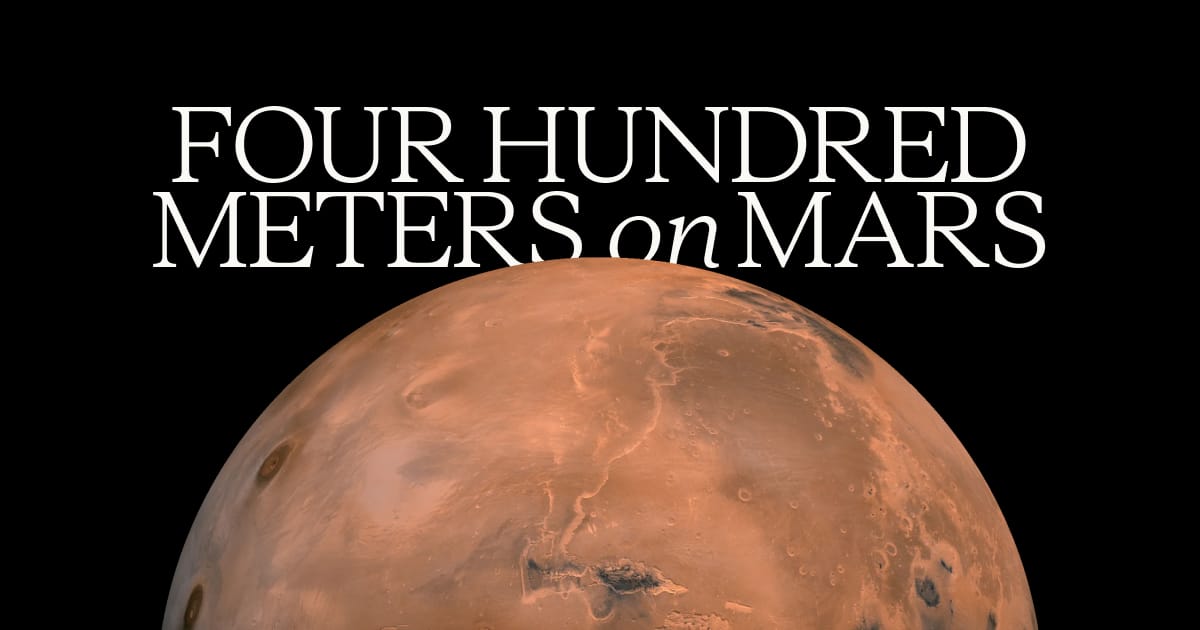
Claude didn’t just output generic instructions; it ingested years of prior rover telemetry, sensor logs, and orbital imagery, then synthesized that knowledge into Rover Markup Language, NASA’s XML-based control protocol.
Using this structured output, Claude planned a series of 10-meter breadcrumb waypoints, iteratively critiquing its own route and refining the path to mitigate risks like wheel slippage, tipping, or sand entrapment.
When you consider that each drive involves simulating over 500,000 environmental variables, from wheel traction and slope to sensor occlusion and hazard probability, you start to appreciate the computational sophistication involved.
Moreover, Claude’s reasoning mirrored the workflow you’d expect from an expert operator.
It evaluated overhead imaging, elevation data, and hazard maps, then coordinated with AutoNav to produce a safe, optimized trajectory. When JPL engineers reviewed the AI-generated waypoints, only minor adjustments were needed based on ground-level camera images.

It’s proof that Claude can effectively bridge the gap between high-level planning and low-level operational constraints.
If you are managing autonomous systems, this is an important precedent: AI can now reliably plan multi-step sequences in complex, high-stakes environments, while you focus on oversight rather than micromanagement.
The implications extend far beyond a single Mars drive. Using Claude in this way cut planning time by roughly half, freeing human operators to schedule more drives, gather more science, and respond to new discoveries faster.
It’s a live demonstration of agentic AI acting as a force multiplier.
Journey Towards AGI
Research and advisory firm guiding on the journey to Artificial General Intelligence
Know Your Inference Maximising GenAI impact on performance and Efficiency. | FREE! AI Consultation Connect with us, and get end-to-end guidance on AI implementation. |
Your opinion matters!
Hope you loved reading our piece of newsletter as much as we had fun writing it.
Share your experience and feedback with us below ‘cause we take your critique very critically.
How's your experience? |
Thank you for reading
-Shen & Towards AGI team